


10 Reasons Why British Women Over 65 Are Cancelling Their NHS Knee Surgery In 2026
A retired NHS consultant orthopaedic surgeon writes about the quiet trend he has observed in 2026, and the ten reasons driving thousands of British women in their late sixties and seventies off the waiting list before their surgery date arrives.

Retired NHS Consultant Orthopaedic Surgeon
Summary: For three decades, British women over 65 with bone-on-bone knee osteoarthritis have been told there are only two roads. Daily painkillers that destroy the stomach. Or an 18-month wait for surgery that fails one in five. In 2026, thousands of them are quietly taking a third road. Here is exactly why.
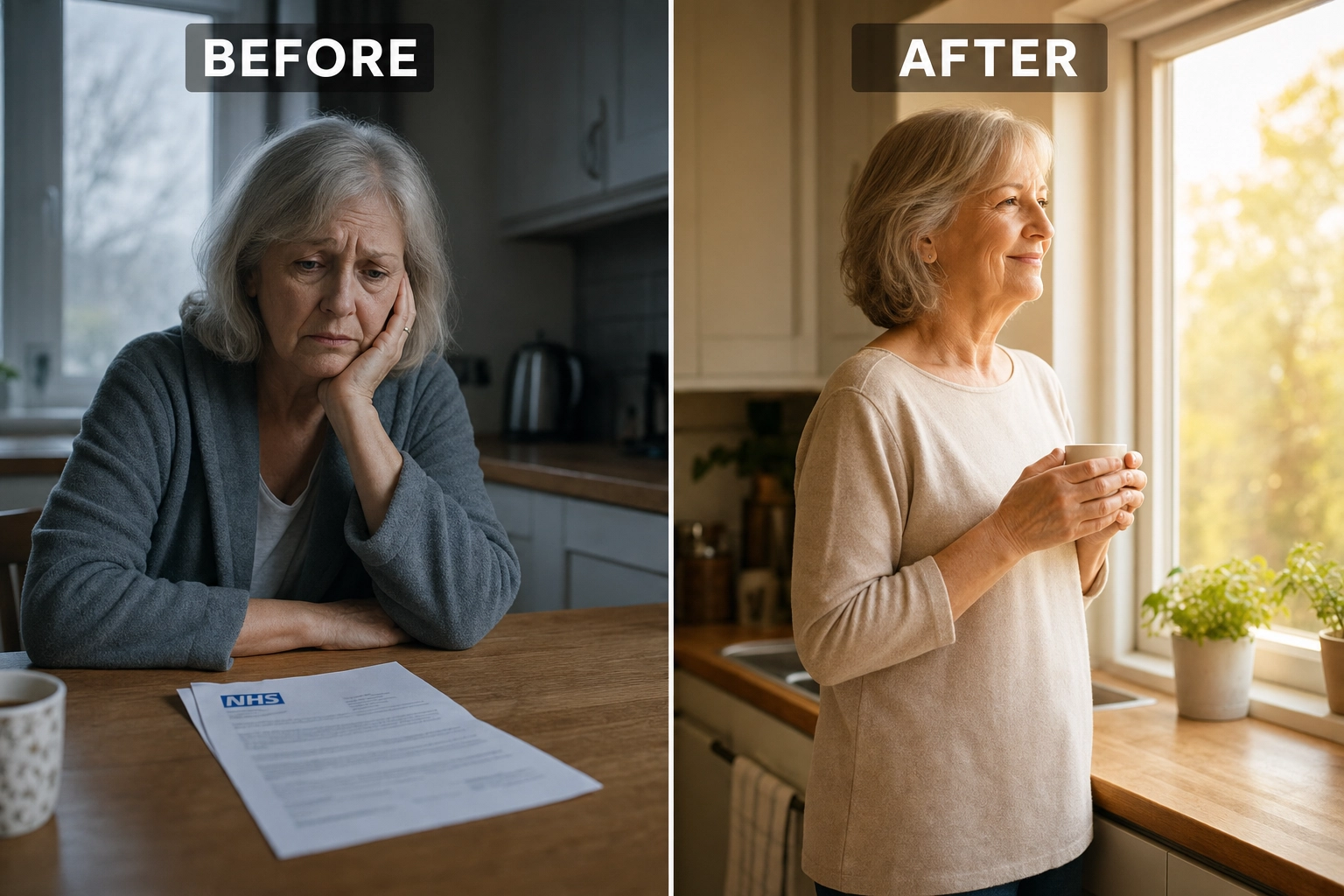
1. The 1-in-5 figure their consultant did not put in writing.
Most consultants mention the 20 per cent chronic pain post-surgery figure verbally and vaguely at the pre-op consultation. None of them put it in the consent form.
Once a woman discovers, unambiguously, that one in five British knee replacement patients is still in pain twelve months later, the calculus changes.
The figure is published. It is in the National Joint Registry data. It has been there for fifteen years. Once she reads it in plain English, she cannot un-read it.
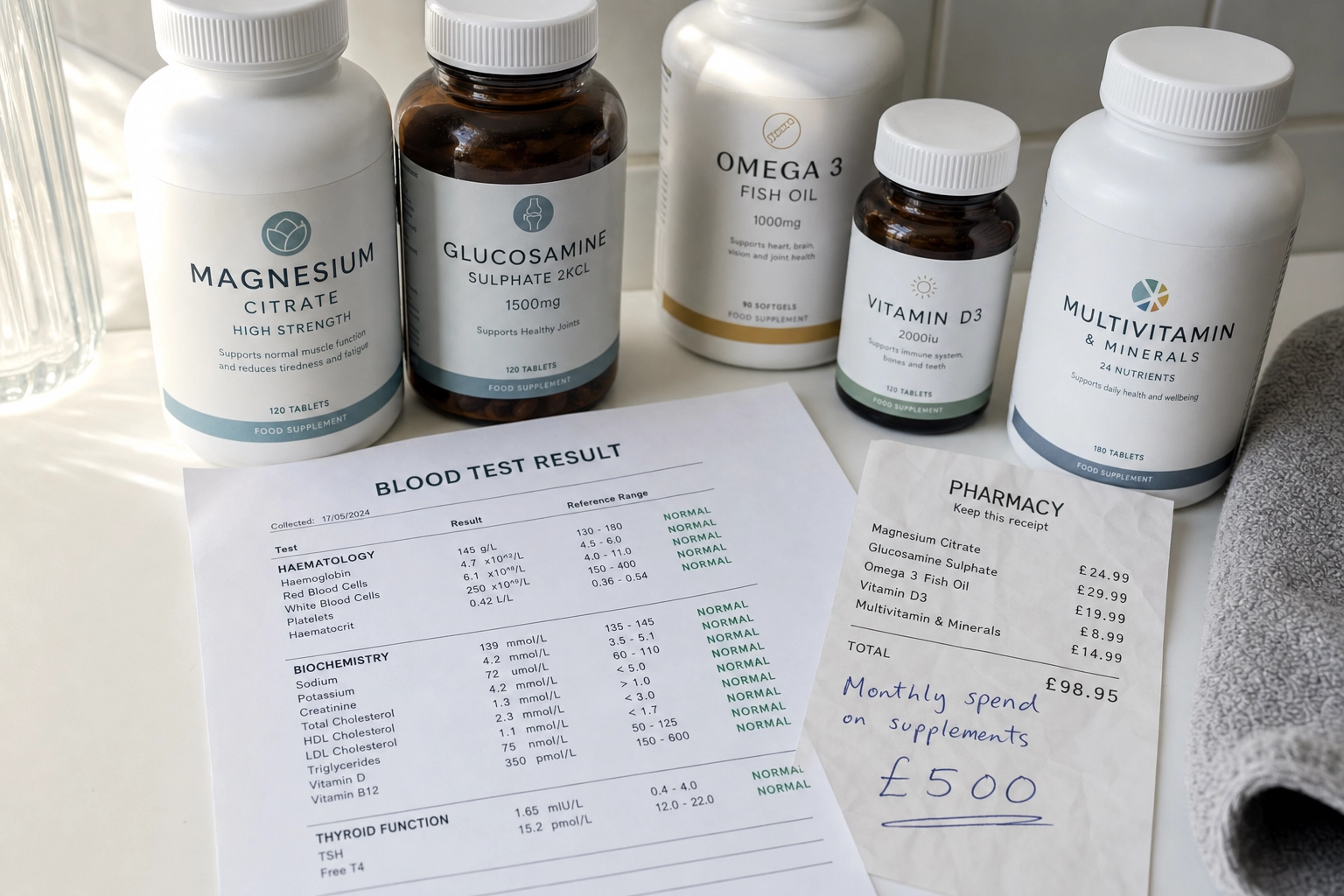
2. The £42 a month from Holland & Barrett was never going to work.
Oral magnesium goes through the stomach into the bloodstream and is distributed evenly across the entire body. Less than 1 per cent reaches a locked, starving muscle around a bone-on-bone joint.
The blood test reads normal because the blood is normal. The tissue is not.
£500 spent on supplements stops feeling like trying and starts feeling like evidence in a quiet case against the existing pathway.
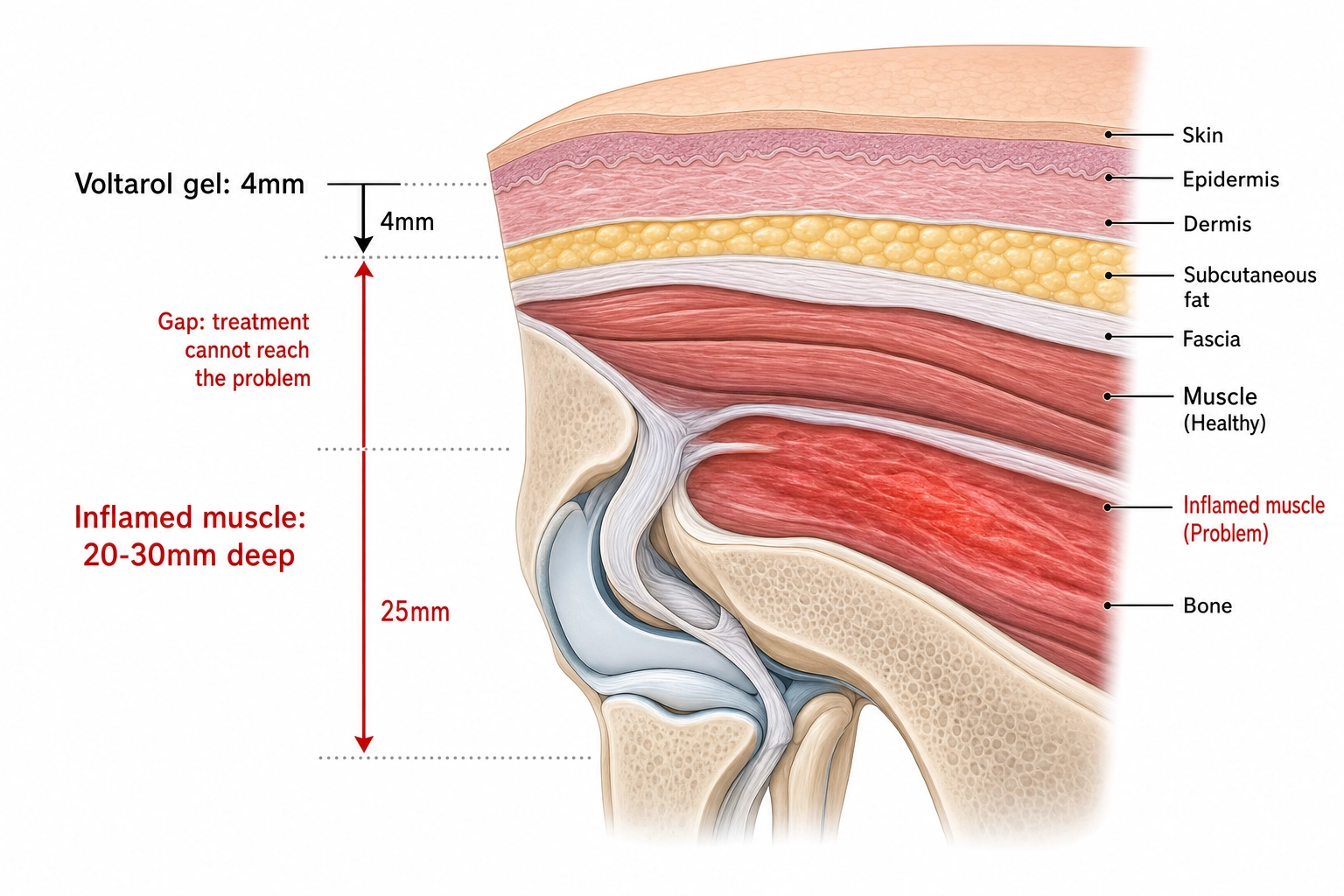
3. The Voltarol gel from Boots was reaching a depth of 4 millimetres.
Their inflamed tissue compartment is sitting at 20 to 30 millimetres below the skin. The gel has been working on the dermis above the joint, not the joint itself.
For a year, two, sometimes five, women have been rubbing in something that anatomically could not reach the place that hurts.
The empty tubes in the bathroom drawer stop being a sign of trying and start being a quiet reminder of how the system has been managing them.
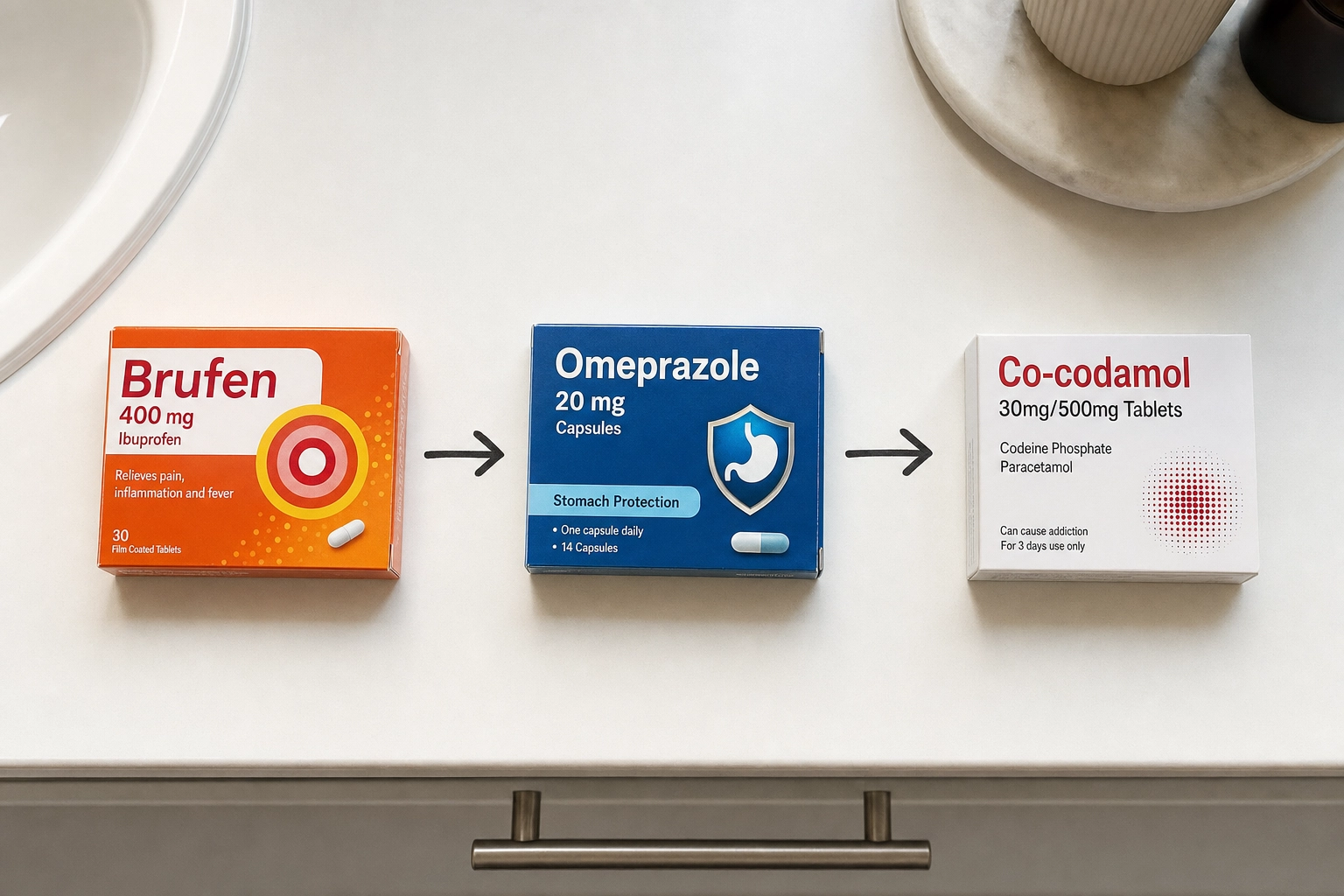
4. The pill for the pain was creating the need for the pill for the stomach.
The Brufen. Then the omeprazole to protect the stomach from the Brufen. Then the co-codamol on the bad evenings. The chain becomes obvious in retrospect.
NSAID-related gastric complications kill around 12,000 UK adults a year. More than skin cancer. More than cervical cancer.
The leaflet inside the Brufen box mentions it. Almost nobody reads the leaflet. Once you do, the bathroom shelf reorganises itself in your head.
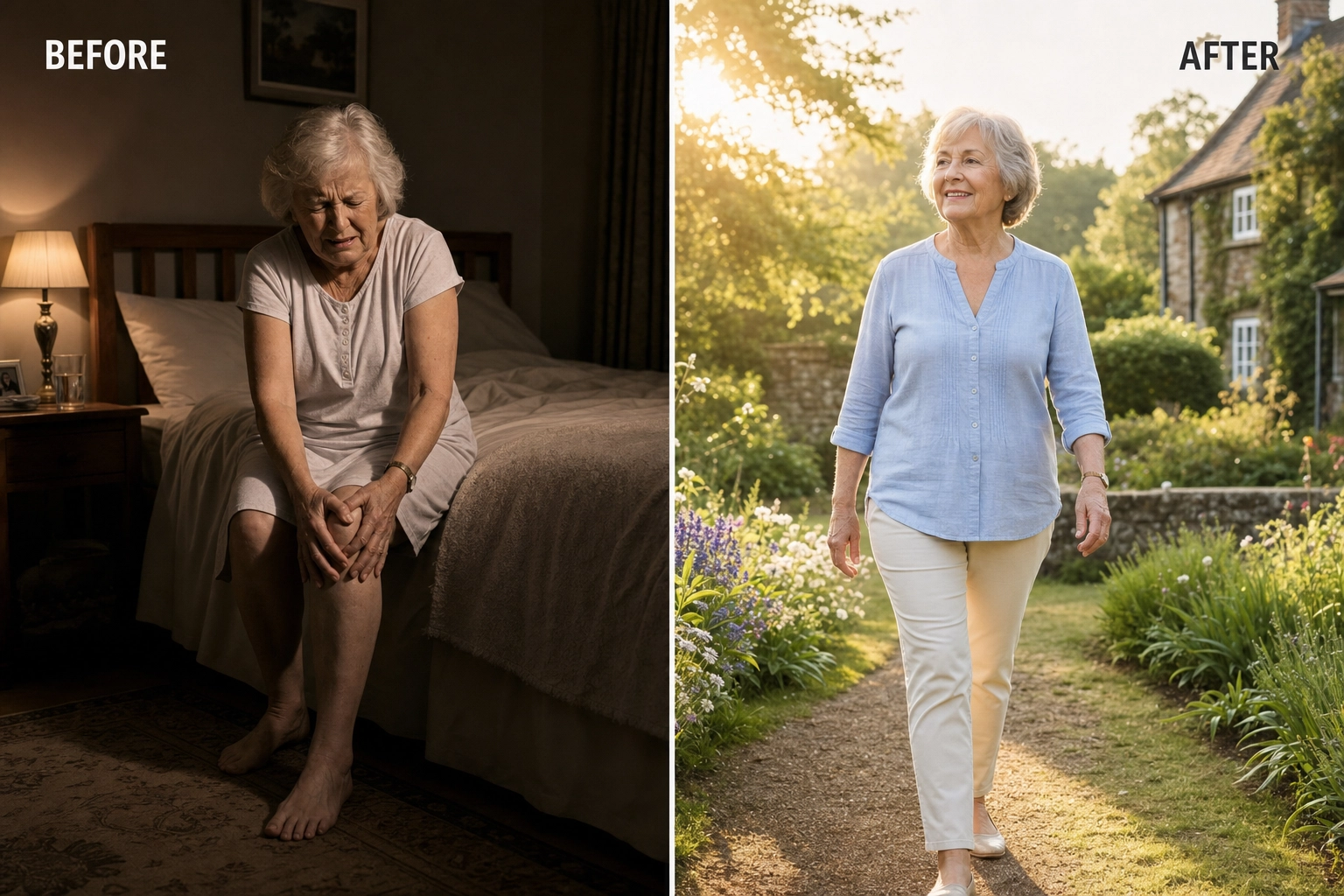
5. The locked muscle around the joint can be reached directly through the skin.
Magnesium chloride, carried by a peppermint-derived penetrant, reaches two to three inches deep. It reaches the tissue that the painkillers never touch.
The muscle releases. The compression on the surrounding nerve eases. The 3am burning stops within days for most women.
For the first time in three years, there is somewhere for the pain to actually go.
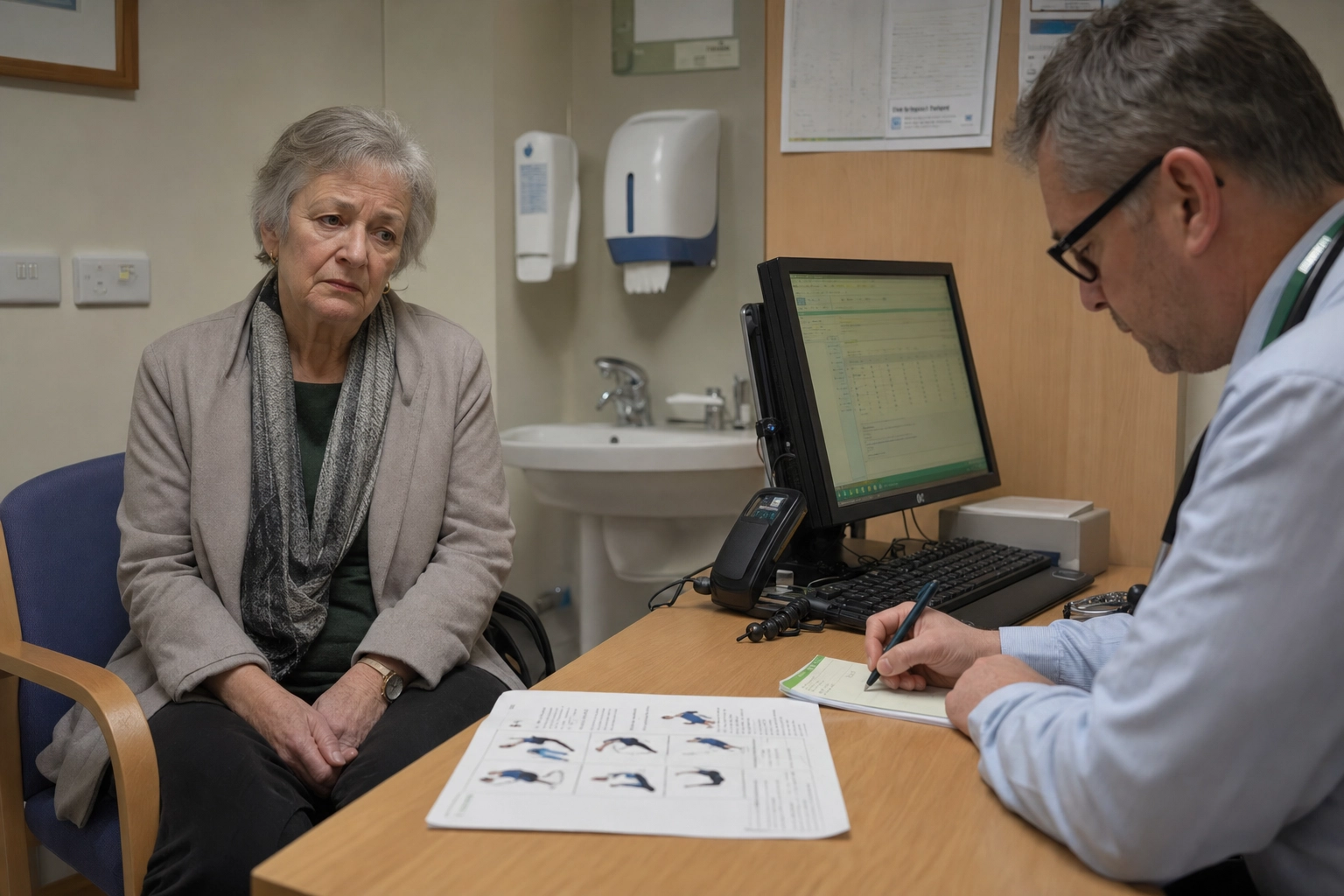
6. "Manage" stops being an acceptable verb.
Every NHS appointment for chronic knee pain ends with the same word. "In the meantime, Mrs Patterson, you'll just have to manage."
It is the British medical system's way of saying: I have nothing more to offer you. It is also the word that quietly transfers the failure of the system onto the patient.
After three years of being told to manage, the word stops landing as care. It lands as the insult it has always been.
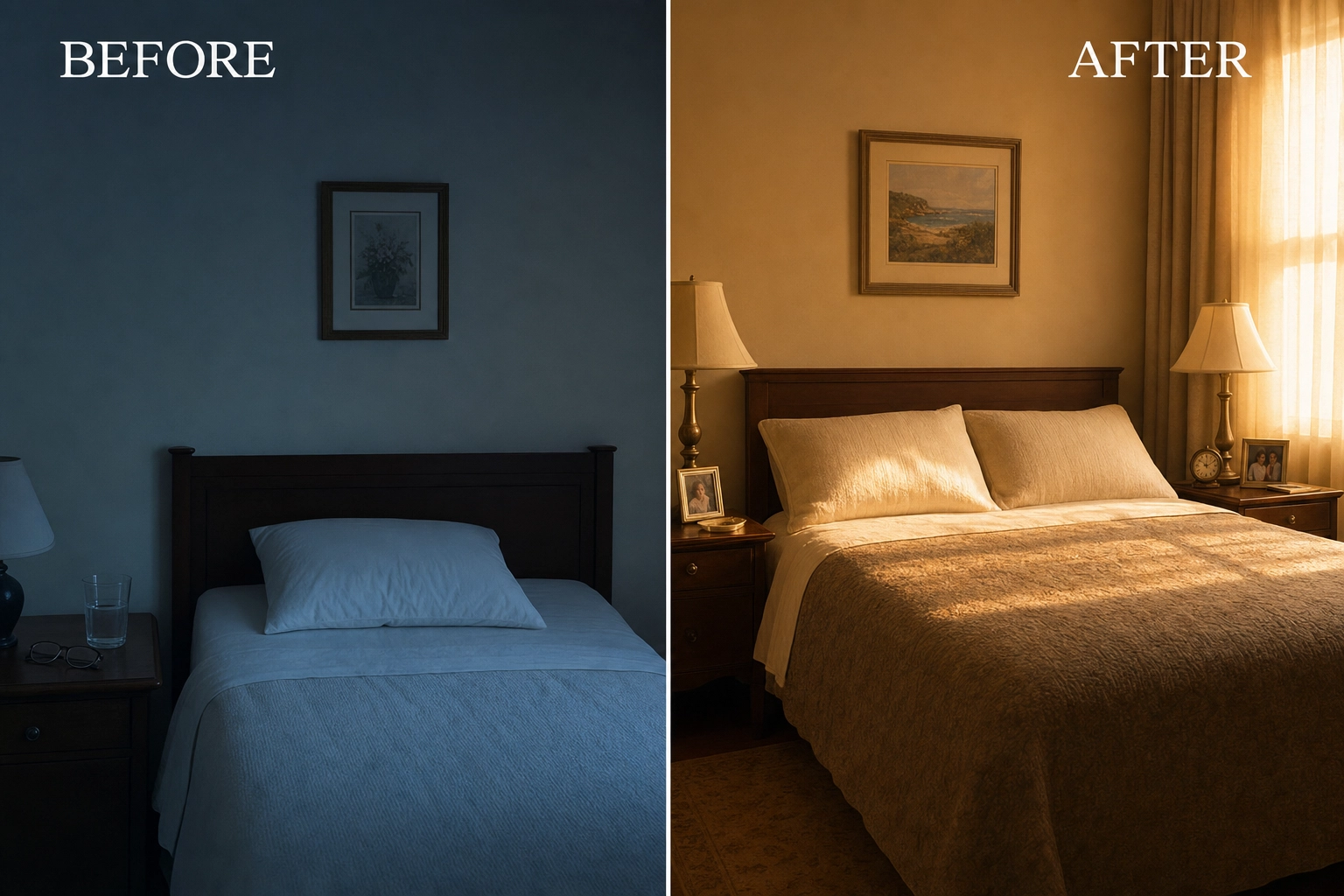
7. Their husbands stop pretending not to hear them cry at 3am.
The spare bedroom that started as a temporary solution two years ago has quietly become permanent. The lie about the snoring. The pretending in the morning.
When the 3am burning stops, she moves back into the marital bedroom. Neither of them say anything about it.
The marriage moves with her. So does the part of her she had quietly buried in a guest pillow.

8. Within the first week, they sleep on the painful side for four hours straight.
Most women report it within the first seven nights. Some within the first.
The deep warmth that spreads across the joint within 90 minutes of the first application is unlike anything heated pads, gels, or massage have produced before.
The result is sleep. Not partial sleep. The first proper sleep in eighteen months.
9. The women who do it write to other women who haven't yet.
This is what one of them, a 64-year-old reader from the Midlands, sent me earlier this month. I have her permission to reproduce it.
"Bone-on-bone both knees for three years. Brufen that burned my stomach. Omeprazole on top to protect the stomach from the Brufen. Three private steroid injections at £900. Each one lasted shorter than the last."
"My consultant put me on the NHS list. Fourteen months. Then he told me 1 in 5 patients are still in pain a year after the operation. I sat at the kitchen table for an hour with that statistic in my head."
"I read about the muscle squeezing the joint, starving for magnesium, and how no oral tablet ever reaches it. That made more sense than anything my GP had told me in three years."
"I ordered the lotion. First night I felt a deep warmth spreading. Not like a heating pad. Deeper. Day four the 3am burning stopped. Week two I slept four hours on my side. Hadn't done that in over a year. My husband noticed before I said anything."
"Six weeks now. Walked the dog round the village last Sunday. Three quarters of a mile. Stood at my daughter's after with a cup of tea. Didn't sit down. I rang the consultant's secretary on the Tuesday. Off the list."
"I spent £900 on injections that stopped working. Eighteen months on the list. Two years on Brufen that fixed nothing. Then a jar of lotion that worked."
"The 1 in 5 was never going to be me. I made sure of it."
— Patricia V., 64 · Midlands · sent 28 April 2026
I receive eight or ten of these every week now. They are not the same woman. They sound the same because the truth sounds the same.

10. They refuse to accept that this is what 70 is supposed to look like.
By the time a British woman in her late sixties arrives at this point, she has paid National Insurance for 45 years. She has done the NHS physiotherapy. She has tried the supplements. She has sat in Boots with the Voltarol. She has signed up for the surgery list.
She has done everything she was asked to do.
Refusing the next step is not selfishness. After 45 years of contributions and 30 years of being told to take another Brufen, refusing is a right.
The 1 in 5 will be one in five of someone. The women cancelling their NHS knee surgery in 2026 have decided it will not be them.
Reaching #10 means one thing: you have already decided.
You have read the ten reasons. You already know what comes next. Below is where the women in this article have ordered theirs.

The UK industry average for medical home-use products is 11%.
Yours sincerely,
Mr James Patterson, FRCS (Tr & Orth)
Retired NHS Consultant Orthopaedic Surgeon
This article is shared with Mrs Patricia V.'s express written consent. The content is for educational purposes and does not replace consultation with your GP or consultant. Individual results vary. Revive Care lotion is a topical preparation containing magnesium chloride, arnica, MSM and menthol. Not intended to diagnose, treat, cure, or prevent disease. Always consult your medical practitioner before stopping any prescribed medication.